
Robotic Laparoscopic Surgery vs Conventional Laparoscopy: Understanding the Difference
Surgical treatment has changed significantly with advances in medical technology. Procedures that once required large incisions can now often be performed through minimally invasive techniques, helping many patients experience less postoperative discomfort and a quicker recovery.
Two commonly discussed minimally invasive approaches are conventional laparoscopy and robotic-assisted laparoscopic surgery. While both use small incisions and specialized instruments, robotic surgery adds advanced technology that can provide the surgeon with enhanced control and precision in selected procedures.
Understanding the difference can help patients have a more informed discussion with their surgeon about which approach may be appropriate for their condition.
What Is Conventional Laparoscopic Surgery?
Conventional laparoscopy is a minimally invasive surgical technique in which the surgeon operates through several small incisions. A thin camera, known as a laparoscope, provides a magnified view of the surgical area on a monitor.
Specialized surgical instruments are inserted through the other small openings. The surgeon directly controls these instruments while watching the procedure on the screen.
Laparoscopic surgery is widely used for procedures involving the abdomen and pelvis, including certain gallbladder, hernia, colorectal, and other surgical conditions.
One of its major advantages is that it generally avoids the larger incision associated with traditional open surgery.
What Is Robotic Laparoscopic Surgery?
Robotic-assisted surgery is also performed through small incisions, but the surgeon operates using a robotic surgical system.
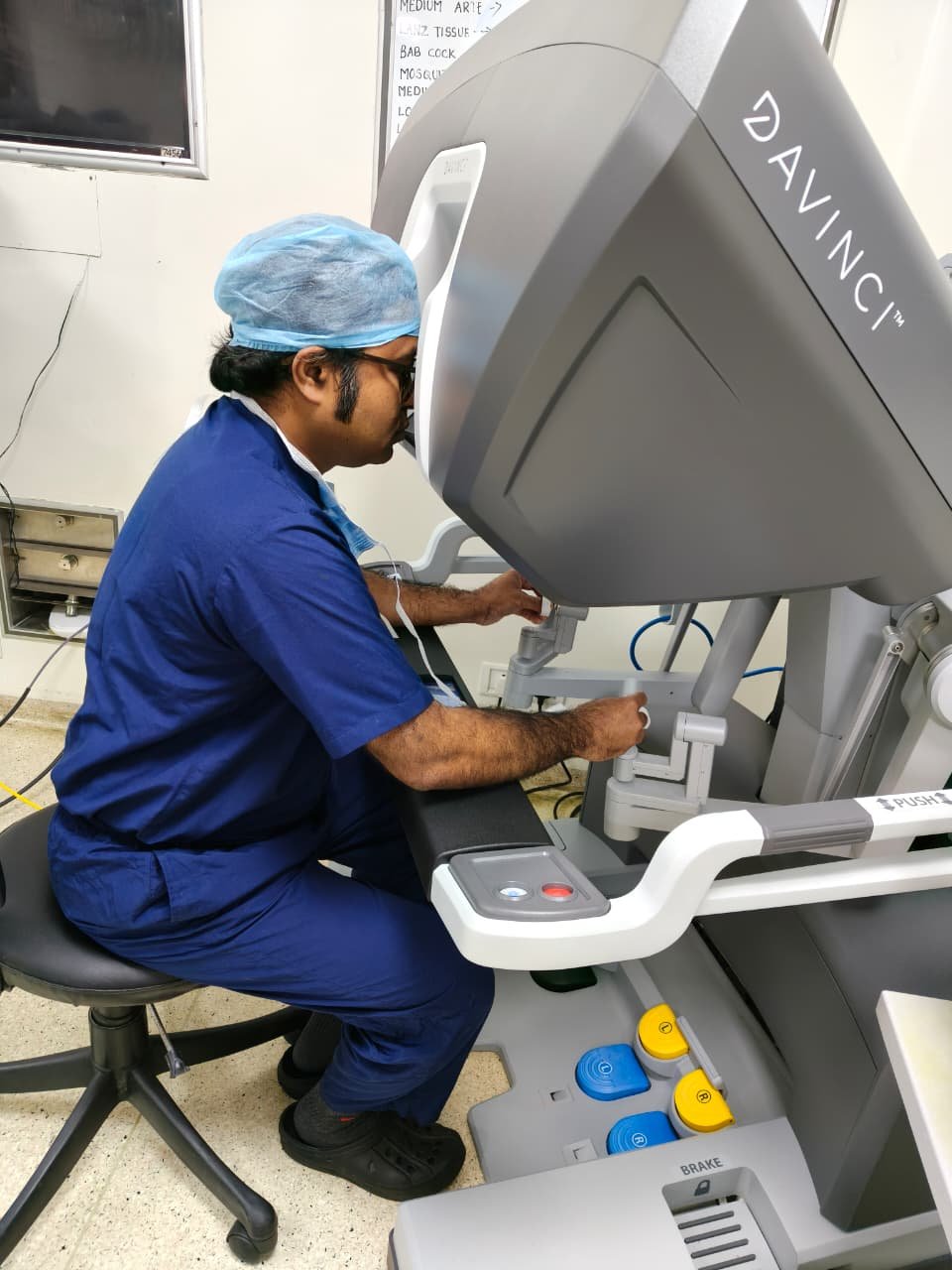
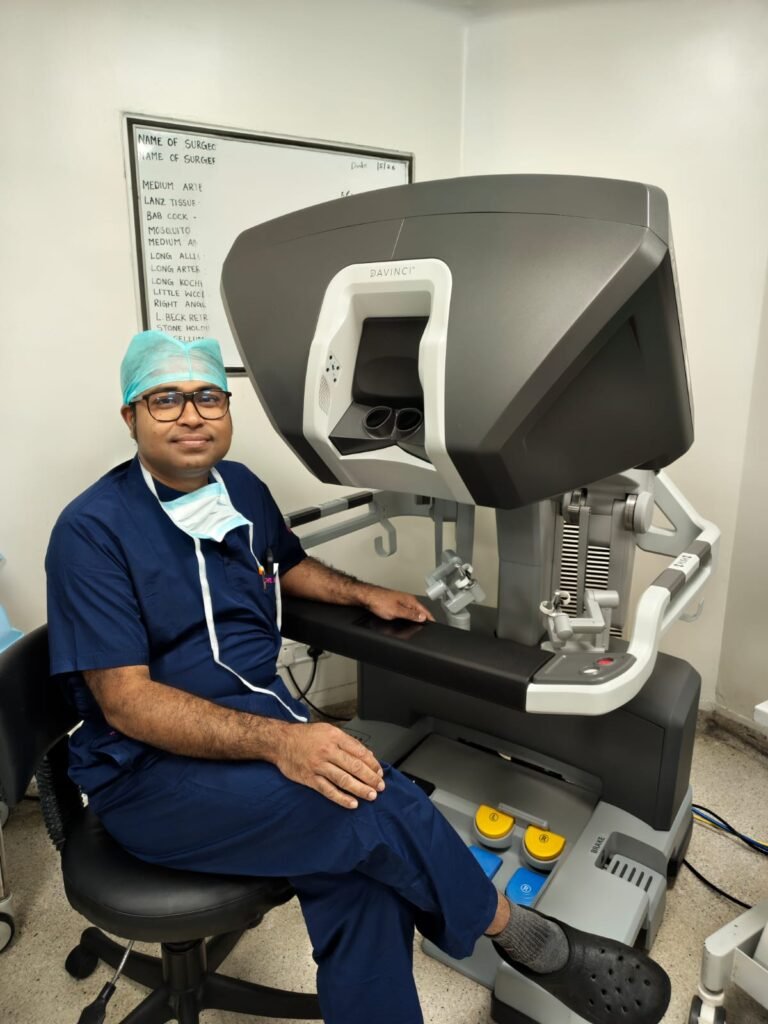
The surgeon sits at a console and controls the instruments using specialized hand and foot controls. The robotic system translates the surgeon’s movements into precise movements of miniature instruments inside the patient’s body.
Importantly, the robot does not operate independently. The surgeon remains in control throughout the procedure.
Robotic systems may also provide a highly magnified, three-dimensional view of the surgical field, which can help with visualization during technically demanding procedures.
Robotic Surgery vs Conventional Laparoscopy
Although both techniques are minimally invasive, there are some important differences.
1. Instrument Control
In conventional laparoscopy, the surgeon manually controls relatively rigid instruments.
Robotic systems provide instruments with greater articulation and a wider range of movement. This can be particularly useful when operating in confined or difficult-to-reach areas.
2. Visualization
Conventional laparoscopy typically provides a magnified two-dimensional image on a monitor.
Many modern robotic platforms provide a three-dimensional, high-definition view, allowing the surgeon to appreciate depth and anatomical structures more clearly.
3. Precision
Both techniques can provide excellent surgical precision when performed by an experienced surgeon.
Robotic systems can offer additional features such as motion scaling and tremor filtration, which may help the surgeon perform delicate movements during selected procedures.
4. Surgeon Ergonomics
During conventional laparoscopy, surgeons generally stand while manipulating instruments and looking at a monitor.
Robotic surgery allows the surgeon to operate from a console in a more ergonomic seated position. This may be beneficial during lengthy or technically complex procedures.
5. Cost and Availability
Robotic surgery usually involves more expensive technology and equipment. As a result, the overall cost may be higher than conventional laparoscopy, depending on the hospital, procedure, and other factors.
Robotic systems are also not available at every healthcare facility.
Does Robotic Surgery Mean Faster Recovery?
Both robotic surgery and conventional laparoscopy are minimally invasive techniques, so both can offer benefits compared with traditional open surgery.
Depending on the procedure and the patient’s overall health, minimally invasive surgery may be associated with:
- Smaller incisions
- Less postoperative pain
- Reduced blood loss in some procedures
- Shorter hospital stays
- Earlier return to normal activities
- Smaller scars
However, recovery varies from one patient to another. Robotic surgery does not automatically mean that every patient will recover faster than someone undergoing conventional laparoscopy.
Is Robotic Surgery Better Than Laparoscopy?
There is no single answer that applies to every patient.
For many routine procedures, conventional laparoscopy can be highly effective. Robotic surgery may offer particular advantages in complex operations where precise movements, enhanced visualization, or access to difficult anatomical areas are important.
The best surgical approach depends on factors such as the patient’s condition, previous surgeries, anatomy, overall health, complexity of the procedure, and the surgeon’s experience with the available technique.
Choosing the Right Surgeon Matters
Technology is only one part of successful surgery. The surgeon’s training, experience, understanding of the patient’s condition, and ability to select the appropriate surgical approach are equally important.
Patients considering minimally invasive surgery should ask their surgeon about the recommended technique, expected benefits, potential risks, recovery time, and available alternatives.
A consultation with an experienced Robotic Laparoscopic Surgeon in Kolkata can help patients understand whether robotic-assisted surgery or conventional laparoscopy is more suitable for their particular condition.
What Should Patients Ask Before Surgery?
Before making a decision, patients may consider asking:
- Why is surgery recommended in my case?
- Is conventional laparoscopy suitable for me?
- Would robotic surgery provide a specific advantage?
- What are the possible risks and complications?
- How long might recovery take?
- How experienced is the surgical team with the proposed procedure?
- What are the expected costs?
Having these questions answered can make the decision-making process clearer and more comfortable.
The Bottom Line
Robotic-assisted laparoscopic surgery and conventional laparoscopy are both important advances in minimally invasive surgery. Robotic technology can provide enhanced visualization, instrument flexibility, and precise control in selected procedures, while conventional laparoscopy remains an effective and widely used surgical approach.
The choice should not be based simply on which technology is newer. Instead, it should be guided by the patient’s individual condition, the complexity of the operation, and the surgeon’s expertise.
A detailed consultation with a qualified surgeon is the best way to determine which approach offers the most appropriate balance of safety, effectiveness, and recovery for an individual patient.