
Robotic Surgery vs Laparoscopic Surgery: What’s the Difference?
Modern surgical techniques have transformed the way many complex procedures are performed. Two minimally invasive approaches that have gained significant attention are robotic surgery and laparoscopic surgery. Both techniques are designed to reduce the need for large surgical incisions, but they differ in the technology used and the way the surgeon performs the procedure.
Understanding the difference between robotic and laparoscopic surgery can help patients make informed decisions when discussing treatment options with their surgeon.
What Is Laparoscopic Surgery?
Laparoscopic surgery is a minimally invasive surgical technique in which the surgeon makes a few small incisions instead of one large incision. A thin instrument called a laparoscope, equipped with a camera and light, is inserted through one of these openings. The camera provides a magnified view of the surgical area on a monitor.
Specialised surgical instruments are inserted through the other small incisions. The surgeon controls these instruments directly with their hands while watching the procedure on the screen.
Laparoscopic surgery is widely used for procedures involving the abdomen and digestive system, including gallbladder surgery, hernia repair, colorectal procedures and several other operations.
What Is Robotic Surgery?
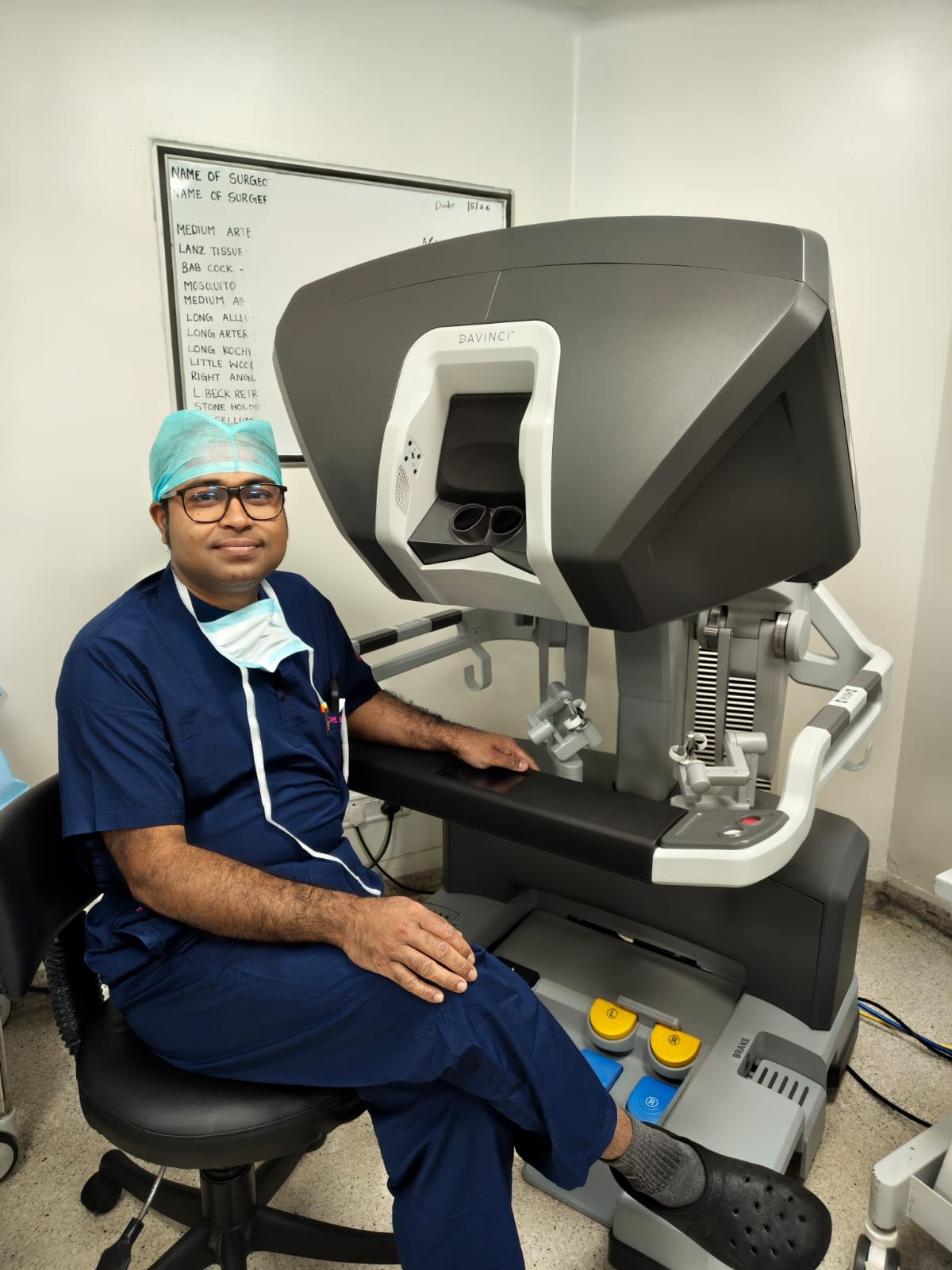
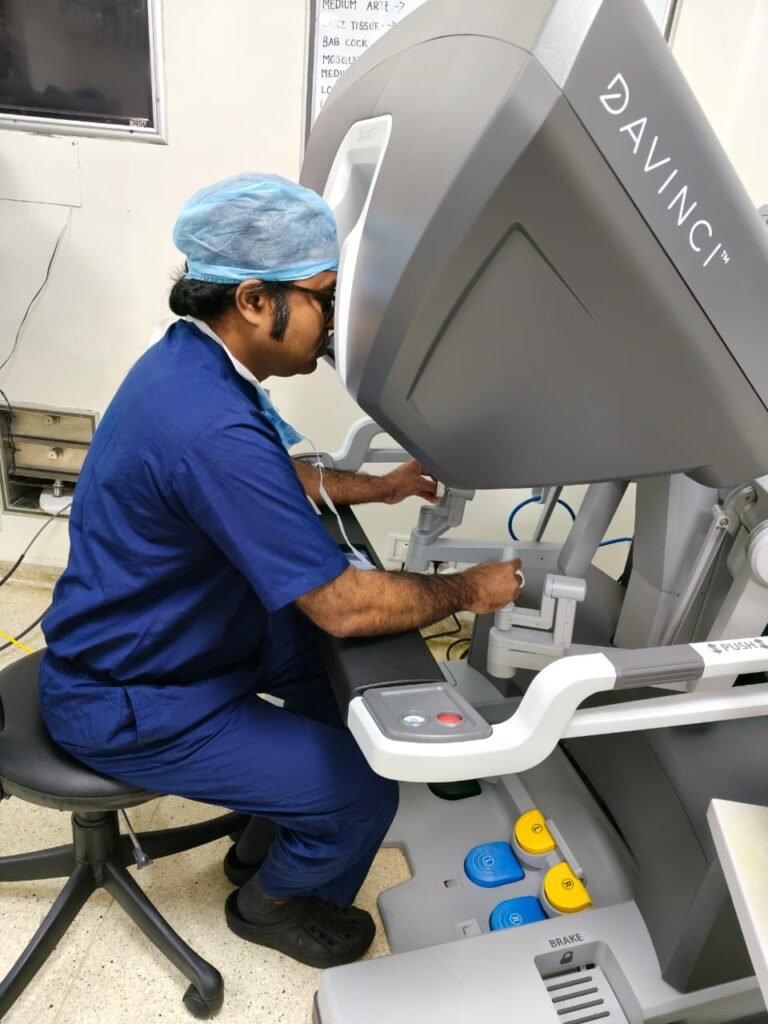
Robotic surgery is also a minimally invasive approach, but it uses a robotic surgical system to assist the surgeon. The surgeon remains completely in control of the operation and operates the robotic instruments from a console.
The robotic system can provide a highly magnified, three-dimensional view of the surgical field. Its specialised instruments are designed to provide a greater range of movement than many conventional laparoscopic instruments.
This technology can be particularly useful when surgery involves small, difficult-to-reach areas or requires precise dissection and suturing.
Robotic Surgery vs Laparoscopic Surgery: Key Differences
Although both techniques use small incisions, there are some important differences:
1. Surgical instruments:
In laparoscopic surgery, the surgeon directly manipulates relatively rigid instruments. In robotic surgery, the surgeon controls specialised robotic instruments from a console.
2. Visualisation:
Traditional laparoscopy generally provides a two-dimensional monitor view, while many modern robotic systems offer an enhanced three-dimensional view with magnification.
3. Instrument movement:
Robotic instruments can offer greater flexibility and wrist-like movement, which may help the surgeon perform delicate manoeuvres more precisely.
4. Surgeon ergonomics:
During conventional laparoscopy, surgeons typically operate while standing and directly handling the instruments. Robotic surgery allows the surgeon to sit at a console while controlling the instruments.
5. Availability and cost:
Robotic surgery requires specialised equipment and trained surgical teams, which can make it more expensive and less widely available than conventional laparoscopy.
Which Is Better: Robotic or Laparoscopic Surgery?
There is no single answer that applies to every patient. The most suitable approach depends on the type and complexity of the operation, the patient’s overall health, previous surgeries, the surgeon’s experience and the available technology.
For many procedures, laparoscopic surgery can provide excellent results with smaller incisions and faster recovery. In selected complex cases, robotic technology may offer additional advantages in visualisation, instrument movement and surgical precision.
Importantly, robotic surgery does not mean that a robot performs the operation independently. The surgeon makes the decisions and controls every movement of the robotic instruments throughout the procedure.
Benefits of Minimally Invasive Surgery
Both laparoscopic and robotic approaches may offer several potential benefits compared with traditional open surgery, depending on the procedure and individual circumstances. These can include:
 Smaller surgical incisions
- Less postoperative discomfort
- Reduced blood loss in selected procedures
- Shorter hospital stays
- Faster return to normal activities
- Smaller scars
However, these benefits can vary depending on the operation and the patient’s individual condition.
Choosing an Experienced Surgeon Matters
The technology used during surgery is only one part of successful treatment. The surgeon’s training, experience and ability to select the right surgical approach are equally important.
Patients considering advanced minimally invasive procedures should discuss the expected benefits, risks, recovery period and alternatives with their surgeon. An experienced surgeon can determine whether conventional laparoscopy, robotic surgery or open surgery is most appropriate for a particular condition.
Consult Dr. Sumantra Ray for Advanced Minimally Invasive Surgery
For patients looking for the Best Robotic Surgeon in Kolkata, choosing a surgeon with expertise in advanced laparoscopic and robotic procedures can make an important difference. Dr. Sumantra Ray, Senior Consultant in GI, HPB, Advanced Laparoscopic and Robotic Surgery, provides specialised surgical care with a focus on modern minimally invasive techniques.
If you are considering robotic or laparoscopic surgery, a detailed consultation can help you understand which approach is appropriate for your condition and treatment goals.